
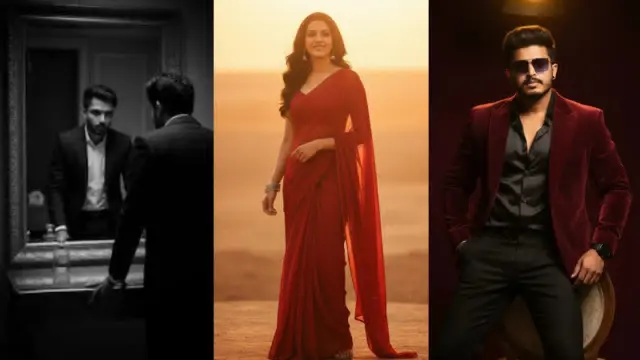
Learn how to craft professional-grade AI prompts that transform ordinary portraits into cinematic masterpieces using Google's Gemini.
Welcome to this comprehensive guide by the MorpyMods creative team. In the evolving landscape of professional photography and digital art, the line between the captured and the conceived has never been more beautifully blurred. We have moved beyond the era where a great portrait was solely dependent on the "decisive moment" of a shutter click. Today, we stand at the intersection of light, lens, and language, where the photographer's vision is articulated not just through aperture and shutter speed, but through the precise, articulate prose of a prompt.
As a professional photographer, retoucher, or visual artist, you understand that cinematic portraiture is a specific discipline. It is not merely about taking a picture of a person; it is about weaving a narrative. It is about evoking the tension of a film still, the deliberate lighting of a Hollywood noir, or the raw, textured emotion of a character study. To achieve this consistently, one must control every variable: the quality of light, the color palette, the depth of field, the wardrobe, and the subject's psychology.
This is where generative AI tools like Gemini have become indispensable allies in the creative workflow. However, the difference between a generic AI-generated image and a professional-grade, cinematic portrait lies entirely in the quality of the instruction. A vague prompt yields a vague result. Conversely, a meticulously crafted prompt, rich with cinematographic terminology and artistic direction, yields an image that is not only striking but also usable for mood boarding, client visualization, or even final compositing.
The purpose of this comprehensive guide is to bridge the gap between technical photography knowledge and prompt engineering. We will delve deep into the syntax of cinematic creation. Below, you will find ten professional, highly detailed Gemini prompts specifically designed for male and female portraits. Each prompt is constructed to act as a creative brief, instructing the AI to consider lighting ratios, lens choices, color theory, and emotional subtext.
Whether you are scouting for inspiration for your next studio session, developing a concept for a high-end editorial spread, or simply refining your skills in digital creation, these prompts will serve as a foundational toolkit. Let us transition from the technical setup of a shot to the art of the prompt itself, exploring how to command the light and shadow to create portraits that whisper stories.
The Anatomy of a Cinematic Prompt: A Professional Framework
Before we dive into the specific prompts, it is crucial to understand why these prompts work. As professionals, we do not have time for guesswork. Every word in the following prompts serves a specific purpose, acting as a directive for the AI.
- The Subject & Pose: We specify gender, age range, and body language to establish character.
- The Lighting Setup: This is the most critical element. We use terms like "Rembrandt lighting," "chiaroscuro," "soft diffusion," or "hard key light" to dictate the mood.
- The Camera & Lens: Specifying a "50mm f/1.4" or "85mm anamorphic" forces a specific depth of field and compression, mimicking real-world photography gear.
- The Color Palette: Terms like "desaturated teal and orange," "monochromatic blue," or "vibrant Technicolor" set the emotional temperature.
- The Environment: Detailing the location (or lack thereof) grounds the subject in a narrative context.
- The Aspect Ratio: Adding parameters like "--ar 2:3" or referencing "cinemascope" ensures the composition fits professional print or digital standards.
With this framework in mind, let us explore the prompts, designed to elevate your portrait work from simple snapshots to narrative masterpieces.
Prompt 1: The Moody Film Noir Detective (Male)
This prompt is designed to generate a classic, high-contrast male portrait reminiscent of 1940s cinema. It relies heavily on the interplay of shadow and a single, motivated light source to create a sense of mystery and gravitas.
The Prompt:
"Cinematic medium shot of a ruggedly handsome man in his late 40s, wearing a vintage tweed overcoat and a fedora, standing in a rain-soaked alleyway at night. Lighting is dramatic chiaroscuro with a single hard key light from a high window, casting long, defined shadows across his face and highlighting the texture of his stubble. Atmosphere is heavy with volumetric fog and mist, catching the light. Shallow depth of field, 85mm anamorphic lens, f/2.0. Color grading is deep shadows, desaturated teal tones in the background, with a warm, amber skin tone. Film grain texture. Mood is contemplative, weary, and intense. --ar 2:3"
Why it works for Professionals: This prompt excels because it doesn't just ask for a "sad man." It specifies chiaroscuro (the strong contrast between light and dark), volumetric fog (which adds depth and dimension), and an anamorphic lens (which gives that distinct wide-screen, oval bokeh effect). For a photographer, this prompt visualizes a lighting setup you could attempt in a studio with a single strobe and a hazer.
Prompt 2: The Ethereal Fine Art Muse (Female)
Moving into the realm of fine art, this prompt focuses on softness, texture, and classical composition. It is ideal for generating concepts for beauty editorials or artistic nude studies.
The Prompt:
"Intimate close-up portrait of a young woman with porcelain skin, lying on a bed of raw silk fabric. Natural window lighting from the left side, creating soft, diffused shadows. Lighting ratio is low, with subtle highlights on the cheekbones and collarbone. Shallow depth of field, focus on the eyes, 50mm f/1.4 lens. Color palette is monochromatic beige and cream, with subtle hints of dusty rose. The composition is minimalist and ethereal, inspired by Peter Lindbergh and Irving Penn. Expression is serene, eyes slightly closed. High-resolution texture, fine art print quality. --ar 4:5"
Why it works for Professionals: Here, the prompt references iconic photographers (Lindbergh and Penn) to establish an aesthetic shorthand. It dictates a specific lighting ratio (low), which in professional terms means the fill light is almost as bright as the key light, resulting in minimal shadows and a soft, dreamy look. The direction to focus on the eyes guides the AI to create a more intimate connection with the viewer.
Prompt 3: The Gritty Urban Documentary (Male)
This prompt shifts toward a documentary or street photography style, capturing a raw, unstaged moment. The focus is on environmental context and naturalistic lighting.
The Prompt:
"Documentary-style full-body shot of a middle-aged man, a blue-collar worker, sitting on the steps of a fire escape in a bustling New York City neighborhood during the golden hour. Lighting is warm, natural backlight, creating a subtle rim light on his shoulders and hair. Environmental context includes blurred motion of yellow cabs and pedestrians in the background. Grainy, pushed film stock aesthetic (Kodak Portra 400 pushed to 800). Lens is a wide 35mm, slightly wide-angle to capture the environment, f/8 for deep focus. Color grading is warm, saturated, with deep amber highlights. The man is looking down, lost in thought, holding a coffee cup. --ar 16:9"
Why it works for Professionals: By specifying a documentary style and pushed film stock, the prompt tells the AI to prioritize authenticity over perfection. The use of a 35mm lens at f/8 (a classic street photography setup) ensures the background remains in focus, telling a story about the environment. The "bokeh" here isn't the goal; context is.
Prompt 4: The High-Fashion Editorial (Female)
Designed for commercial and fashion applications, this prompt is sleek, polished, and focuses on graphic composition and high-contrast color.
The Prompt:
"Full-body fashion portrait of a tall, statuesque female model wearing a bold, architecturally structured red couture gown. Studio setting with a stark white seamless background. Lighting is high-key, clean, and graphic, using a large octabox directly above the camera to create even, shadowless illumination with a slight gradient on the floor. Pose is dynamic and angular, hands on hips, looking directly into the lens with a confident, powerful gaze. High sharpness, commercial retouching quality, vibrant colors, 70-200mm lens at 135mm, f/4. --ar 2:3"
Why it works for Professionals: This is a classic e-commerce or editorial look. The prompt specifies a high-key setup (bright, with low contrast between highlights and shadows) and a graphic quality. By asking for an architecturally structured gown and an angular pose, it moves away from organic curves and toward a modern, striking silhouette ideal for magazine spreads.
Prompt 5: The Introspective Character Study (Male)
This prompt delves deeper into psychology, focusing on texture, age, and the "lived-in" feeling of a character's face.
The Prompt:
"Extreme close-up, macro portrait of an elderly man's face. Focus is on the texture of his skin: deep wrinkles, freckles, and white stubble. Lighting is Rembrandt lighting from the right, with the signature triangle of light on the left cheek. The background is completely black (low-key). His eyes are pale blue, filled with a sense of wisdom and melancholy, holding back tears. Shot on a 105mm macro lens, razor-thin depth of field, focus racked to the nearest eye. Black and white conversion with heavy contrast, silver gelatin print aesthetic. --ar 1:1"
Why it works for Professionals:Rembrandt lighting is a cornerstone of portrait photography. This prompt uses that technical term to ensure the lighting has a classic, painterly quality. By specifying a macro lens and extreme close-up, it forces the AI to render hyper-detailed skin texture, which is essential for character-driven portraiture.
Prompt 6: The Mysterious Cinematic Siren (Female)
Drawing inspiration from suspense and thriller genres, this prompt uses color and shadow to build tension and allure.
The Prompt:
"Split lighting portrait of a woman with dark hair, standing behind a rain-streaked glass window. Her face is partially obscured by the water droplets and the reflection of city lights. Lighting is a single, hard light source from the left, splitting her face exactly down the middle: one side brightly lit, the other in complete darkness. Color palette is cyberpunk-inspired: deep purples, electric blues, and neon pink reflections on the wet glass. Cinematic composition, vertical orientation, moody, mysterious, and seductive. 50mm lens, f/1.8, focusing on the texture of the water on glass. --ar 9:16 (vertical)"
Why it works for Professionals:Split lighting is a dramatic technique often used to portray duality or internal conflict. This prompt combines that technical lighting with a complex environment (rain-streaked glass) and a specific color palette (cyberpunk) to create a narrative that feels lifted from a Blade Runner scene. The 9:16 aspect ratio makes it perfect for vertical platforms or mobile wallpaper concepts.
Prompt 7: The Rembrandt-Inspired Classical Painterly (Male)
This prompt bridges the gap between photography and classical painting, utilizing warm tones and the qualities of light found in Old Master artworks.
The Prompt:
"Classical painterly portrait of a bearded man in his 30s, wearing a simple linen tunic. Lighting is warm, directional light from a single oil lamp (candlelight), illuminating his face from the side. The background is dark and undefined. The skin tones are rich and warm with deep, natural shadows. The composition is inspired by a Caravaggio painting, with a focus on the dramatic contrast between light and dark. Shallow depth of field, soft focus on the edges, slight glow in the highlights. Color palette is warm sienna, burnt umber, and ivory. --ar 3:4"
Why it works for Professionals: This prompt moves away from the crispness of digital photography and toward the soft, glowing quality of oil painting. Terms like painterly, Caravaggio, and a specific color palette (sienna, umber) guide the AI to render light not as a flash, but as a luminous, almost tangible substance.
Prompt 8: The Backlit Ethereal Glow (Female)
Backlighting is a favorite technique for creating a dreamy, angelic, or highly romantic aesthetic. This prompt masters the art of the halo effect.
The Prompt:
"Profile portrait of a young woman with flowing hair, standing in a field of tall grass during sunset. She is backlit by the setting sun, creating a bright, golden rim light around her hair and shoulders. The front of her face is in soft shadow, with warm fill light bouncing off the grass. The atmosphere is hazy and glowing. Shallow depth of field, dreamy and romantic aesthetic. Lens flare is present but subtle, adding to the ethereal mood. Color grading is warm and golden, with soft pastel highlights. Shot on 135mm f/2.0 lens. --ar 16:9"
Why it works for Professionals: Backlighting is technically challenging to expose for in real life, but in prompting, it creates stunning results. By specifying rim light and subtle lens flare, the prompt instructs the AI to treat the light as the main subject. The mention of warm fill light bouncing off the grass shows an understanding of how light interacts with the environment, a key detail that separates amateur prompts from professional ones.
Prompt 9: The Environmental Storyteller (Male/Female - Versatile)
This prompt is designed for versatility, focusing on the character's interaction with their environment to tell a story without words.
The Prompt:
"Medium wide shot of a female jazz singer in a smoky, dimly lit 1920s speakeasy. She is standing at a vintage microphone, eyes closed, lost in the music. The light is a single warm spotlight from above, isolating her from the dark, wood-paneled background. In the shadows, you can just make out the silhouettes of a small audience and a piano. Atmosphere is thick with smoke. Shallow depth of field, but enough depth to keep the scene readable. Color grading is warm amber and sepia tones, with deep blacks. Mood is nostalgic, soulful, and captivating. --ar 2:3"
Why it works for Professionals: This is an environmental portrait. The subject is the focus, but the setting is equally important. The prompt builds a complete scene: a speakeasy, smoke, silhouettes. For a photographer, this prompt could serve as a production plan for a styled shoot, detailing the props (microphone), lighting (spotlight), and wardrobe implied by the era.
Prompt 10: The Modern Minimalist (Male/Female)
Sometimes, less is more. This final prompt strips away the elaborate environments to focus purely on form, expression, and geometry.
The Prompt:
"Minimalist studio portrait of a bald man with a strong jawline. The background is a seamless gradient from dark gray to light gray. Lighting is loop lighting, created with a large softbox placed slightly above and to the camera left, creating a small, defined shadow of the nose on the cheek. The expression is neutral, strong, and stoic. High contrast, sharp focus on the eyes and the contours of the face. Black and white, inspired by the work of Peter Lindbergh and Herb Ritts. Clean, modern, and powerful composition. 85mm lens, f/5.6. --ar 4:5"
Why it works for Professionals: Minimalism is unforgiving. Every detail must be perfect. This prompt uses loop lighting (a standard but often misused term) correctly to define the facial structure. By removing color and environment, the focus is entirely on the geometry of the face and the quality of the light, making it a powerful tool for generating casting ideas or beauty studies.
Why Use These Gemini Prompts
- Professional Terminology – Incorporates real photography language for authentic results
- Lighting Precision – Specifies exact lighting setups used by working photographers
- Cinematic Composition – Frame rates, aspect ratios, and lens choices for film-quality output
- Emotional Direction – Guides the AI toward specific moods and psychological states
- Versatile Applications – Suitable for mood boarding, client presentations, or final artwork
Frequently Asked Questions
Q: Can I use these prompts in other AI tools besides Gemini?
A: Yes. While optimized for Gemini, these prompts work effectively in Midjourney, DALL-E, and Stable Diffusion with minor adjustments.
Q: Do I need photography experience to use these prompts?
A: No, but understanding the terminology will help you refine results. The prompts are designed to bridge the gap between technical knowledge and creative vision.
Q: Can I modify these prompts for commercial use?
A: Absolutely. These prompts are templates. Adjust the age, clothing, lighting, and environment to match your specific project requirements.
Q: Will these prompts work for group portraits?
A: They are optimized for single subjects, but you can adapt them by changing "portrait of a man/woman" to "portrait of a couple" or "group of people" while keeping the cinematic parameters.
Q: What aspect ratio is best for print?
A: The prompts include professional ratios: 2:3 (standard print), 4:5 (fine art), and 16:9 (cinematic widescreen). Choose based on your output medium.
Summary – Quick Reference
- Understand the anatomy: Subject, Lighting, Lens, Color, Environment
- Use technical terminology: Rembrandt, chiaroscuro, anamorphic
- Specify exact gear: 50mm f/1.4, 85mm, macro
- Define the mood: contemplative, serene, powerful, mysterious
- Include aspect ratio: --ar 2:3, 16:9, 4:5
- Reference iconic photographers: Lindbergh, Penn, Ritts, Caravaggio
- Add atmospheric details: fog, rain, smoke, golden hour
- Control depth of field: shallow, deep focus, f/stop values
- Specify color grading: teal and orange, monochromatic, black and white
- Iterate and refine: Adjust prompts based on results
Final Thoughts
Mastering the art of the cinematic portrait in the age of AI is not about replacing the camera; it is about expanding the palette of the imagination. These ten prompts are more than just strings of keywords; they are blueprints for visual storytelling, written in the language of light that photographers have spoken for over a century.
As you integrate these into your professional workflow, use them as a starting point. Treat Gemini as a collaborative partner. Adjust the lighting, tweak the color grading, change the lens. The ultimate goal is to refine your ability to articulate a vision so clearly that the technology becomes an extension of your creative will, producing images that are not just seen, but felt.
For more professional resources, tutorials, and creative tools, visit MorpyMods regularly. We are committed to helping creators push the boundaries of digital artistry.